

May 08, 2026
Weak cooling or persistent blowing noise might be a sign of low refrigerant AC compressor damage. It is a condition that might put hidden strains on your car’s air conditioning system. If there is low refrigerant in the car’s AC system, it may lead to an uncomfortable environment for the driver and passengers.
On that basis, we’ll discuss the signs of a low AC refrigerant, associated risk and what repair solutions are available.
An Overview Of The Car’s Compressor
The car air conditioning compressor is the central component that maintains optimal temperature throughout the vehicle. It works by circulating and pressurising refrigerant. This process allows heat to be removed from inside the cabin and released outside. The car’s AC system mainly works through the following three processes:
1. Compression Stage
The AC compressor increases both pressure and temperature of the gas. In turn, it leads to the creation of a hot, high-pressure refrigerant. This change prepares the refrigerant to release heat.
2. Refrigerant Circulation
The high pressure gas moves towards the condenser to cool down. Here, it converts the gas into a liquid before flowing to the evaporator and removing the heat from the car’s interior.
3. Cooling Of The Cabin
The car’s air conditioning system cools your car through the cycle of refrigerant compression, condensation, evaporation and expansion.
5 Common Signs of A Low Refrigerant AC Compressor Damage
Cars may indicate multiple signs of low refrigerant in the AC compressor. Some of which include:
1. Warm Air Instead of Cold Air:
If you feel warm, even if the temperature is set to the lowest level of cooling, then it is a clear indicator of a compression malfunction.
2. Unusual Noises When the AC Is On:
If you hear squealing, rattling or grinding noises from the AC vents after turning it on, then the system might not be working properly.
3. Weak Airflow:
Low circulation of air through the cabin indicates the compressor may not be maintaining the correct pressure in the system.
4. AC Turns On and Off Frequently:
Frequent on and off of the car’s AC shows the sign of short cycling. This usually indicates that the system is struggling to maintain the correct pressure levels and it needs urgent attention for car AC repair Perth.
Risks Of Running An AC with Low Refrigerant
Running a car’s AC system with low refrigerant may affect multiple components, along with low cooling performance. The risk below explains how continued fault AC usage may lead to system inefficiency and when your car needs urgent attention from an automobile repair shop:
1. Compressor Overheating
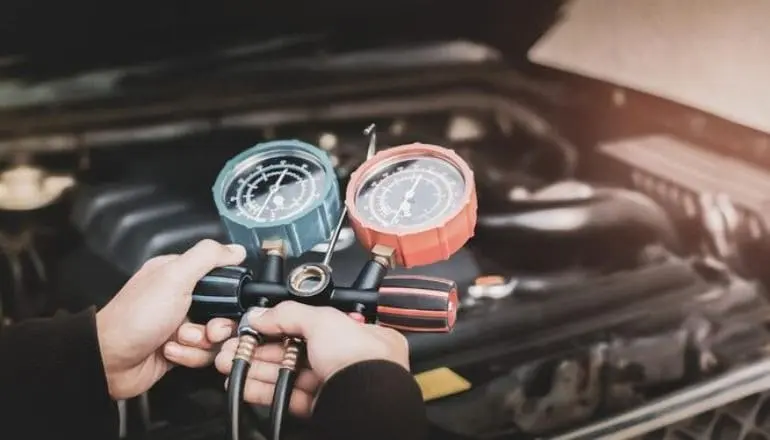
If the refrigerant levels are low, the compressor loses its ability to regulate temperature with higher efficiency. Without adequate refrigerant levels, heat builds up inside the compressor as it continues to run for longer cycles. This continued heat exposure increases internal stress and reduces the efficiency of moving parts.
2. Increases Energy Consumption
Low refrigerant levels force the car’s AC system to work harder to achieve the optimal cooling level. Since the system is not achieving the stated temperature, the compressor runs for extended periods and consumes more electricity. Such malfunctions may also increase the need for car engine service because the cooling system places additional strain on the engine.
3. Damage To Internal Components
A low refrigerant condition may affect the entire AC system. Components like valves, seals and coils may begin to experience irregular pressure. The system may also lose proper lubrication, which increases the friction between moving components and increases the risk of multiple components failing. In such conditions, you may also reach out to mechanics for transmission repairs Perth to prevent car stability issues.
Ice Formation On Evaporator Coils
Low refrigerant may cause a drop in pressure that leads to excessively low temperatures in the evaporator coil. This effect may result in moisture freezing on the coil surface instead of being removed as condensation. As ice builds up, the airflow becomes restricted and further reduces the cooling efficiency. In this condition, the car air conditioning repair becomes essential to prevent further damage.
Ways To Fix A Car AC Compressor
If you are noticing any signs that indicate a malfunction in your car’s AC system, then quickly get it fixed by an auto care shop Perth.
The four key steps to fix a car’s AC compressor are as follows:
1. Refrigerant Recharge
If the AC malfunction is caused by low refrigerant, the first step is to restore its proper levels through regassing. While going for a refrigerant recharge, you may also need to have an auto brake repair service. This is because the car’s AC may occasionally make the brake pedal feel harder or less responsive.
2. Leak Detection and Repair

If refrigerant levels drop repeatedly, it usually indicates a leak within the system. Fixing such leaks is highly crucial to prevent any further damage. The car air conditioning repairs Perth are usually done by using UV dye or electronic tools to locate leaks in hoses, seals or coils. Once the leak is identified, the damaged component is repaired or replaced to restore the AC system.
3. Condenser and Cooling Fan Repair
The efficiency of the compressor depends on the condenser and cooling fans functionalities. If these parts fail, the compressor is forced to work harder. For example, a blocked or damaged condenser may not remove heat from the cabin effectively.
Similarly, a faulty cooling fan may reduce the airflow in the cabin. Diagnosing, repairing or replacing these components from professionals like auto repairs Perth helps to maintain proper heat exchange and protects the compressor from excessive load.
4. Compressor Clutch Repair or Replacement
If the compressor clutch fails, the compressor may not engage and the car’s AC begins to malfunction. It may also negatively impact your car’s engine by increasing mechanical load.
In such cases, car AC and engine repair services become essential. This combined service includes inspection of electrical connections, replacing worn components and inspecting/replacing the drive belt (serpentine belt).
5. Cabin Air Filter Issues
At the time of logbook servicing, ask your mechanic to also check the cabin air filters. If this filter becomes clogged with dust, airflow through the evaporator is reduced. This effect limits the heat exchange and forces the system to run longer to achieve the optimal temperature. To prevent such an occurrence, replace the air filter to restore proper airflow and allow the cabin to cool more efficiently.
Final Thoughts
Low refrigerant levels directly affect the car’s AC compressor’s ability to maintain optimal temperature in the cabin. A malfunctioning AC system may increase the car’s energy consumption, damage internal components, cause ice formation on the evaporator coil and overheating of the compressor. To prevent such instances, pay attention to the common symptoms of car AC leaks and reach out to a car AC mechanic for the most appropriate solution.
Also Read: Why Your Car’s AC Is Blowing Warm Air And How to Fix It?
FAQ’s
1. What happens if you keep using AC with low refrigerant?
Answer 1:
When the AC is low on refrigerant, the compressor has to work harder to cool the air. This may cause the compressor to overheat and require urgent attention from an autocare shop to prevent further damage.
2. Is low refrigerant the most common cause of compressor failure?
Answer 2:
Yes, low refrigerant is a leading cause of compressor issues, but not the only one. Electrical problems, maintenance or wear can also be common causes.
3. What are the signs of low refrigerant in a car’s AC?
Answer 3:
The most common signs of low refrigerant include poor cooling, warm air blowing from the vents and strange noises when the AC is on.
4. Can low refrigerant cause the AC to blow warm air?
Answer 4:
When the refrigerant level is low, the system may not cool the air, leading to warm air blowing out. To prevent adverse effects, diagnose your car’s AC system from auto care services and go for necessary repairs.
5. How long can a compressor survive with low refrigerant?
Answer 5:
A compressor can run for a while with low refrigerant, but its lifespan will be reduced.
6. Can low refrigerant damage other AC components?
Answer 6:
Yes, low refrigerant can impact other parts by causing pressure issues and lubrication problems.
7. What repairs are usually needed with low refrigerant?
Answer 7:
Repairs for low refrigerant AC compressor damage typically require recharging the refrigerant and identifying any leaks in the system.